The fab as one system: Rethinking semiconductor operations


.svg)
Key Takeaways
- Technical capability no longer ensures semiconductor success—operational readiness during the construction-to-operations handoff does.
- Fragmented ownership during the construction creates delays, rework, and safety risk exactly when stakes are highest.
- Integrated facility partners who self-perform across the semiconductor fab lifecycle deliver measurable gains: 99.9%+ uptime, zero safety incidents, and millions in cost savings.
Transcript
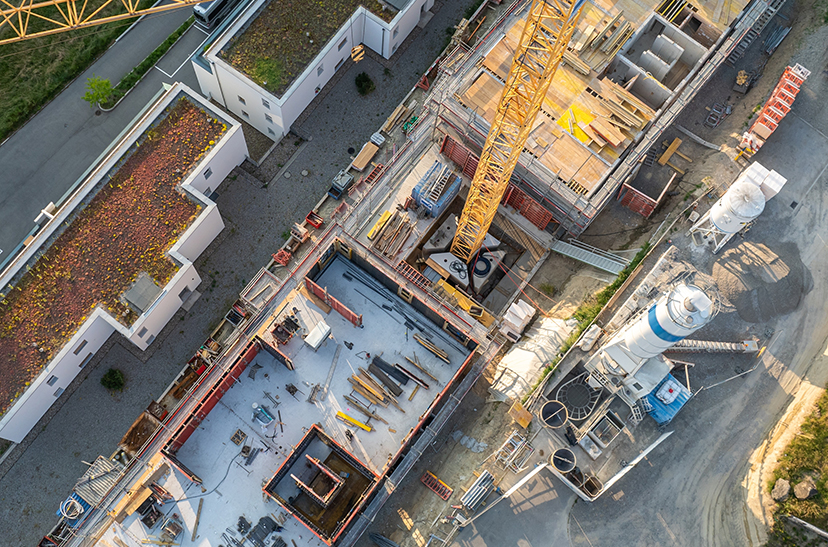
AI demand has triggered one of the largest construction booms in semiconductor history. New fabs, major expansions, and reshored capacity are all coming online at once, at a scale that is hard to overstate. A single large project can host roughly 10,000 workers a day.
And the industry may be even bigger than it looks. McKinsey research suggests market analysts are underestimating the true size of the semiconductor market by 14 – 23%, and could total $1.6 trillion by 2030. The pressure from CHIPS and Science Act to bring capacity online fast only adds to the pressure. Every month of delay in launching a new fab carries a measurable cost.
With process technology advancing everywhere, technical capability alone no longer separates successful semiconductor ramp ups from the rest. The differentiator is increasingly how well facilities, production tools, and specialized workforces operate as one system.
In part one of this two-part series, with Aaron Schumaker, Director of Operations, National Semiconductor Sales, and Neha Dhingra, Vice President, Commercial and Operations Management - Microelectronics, we will look at the semiconductor industry as an indicator of a much bigger trend. Complex building projects, including data centers, airports, life science labs, and hospitals, rarely fail because of poor design or poor construction. They fail in the space between: the transition after the environments are built, before operations are ready to run.
As projects become more sophisticated, transitioning between construction and operations requires a specialized partner to ensure facilities are ready to perform. With the right approach, a specialized operational partner can bridge the gap between project completion and operational success.
The risk: Transitioning from construction to operations
The National Institute of Standards and Technology estimated $15.8 billion in annual losses to the U.S. construction industry from interoperability failures, the majority of which showed up as rework. Twenty years later, it remains the most-cited figure for construction waste of its kind, not because nothing has changed, but because the underlying problem has not.
The handoff from building to operating is where value quietly leaks out of a project. A certificate of occupancy proves a fab is complete. What proves it is operational?
Part of the answer is structural. A historical divide separates facilities operators who never touch tools from tool specialists who leave after startup. Each phase of the project is often handled by a different vendor. That fragmentation has a price: handoff delays between facility readiness and tool readiness, scope gaps and rework, coordination risk that multiplies with every change order, and no single point of accountability when uptime slips.
Contamination, power reliability, environmental instability, documentation gaps, safety incidents also compromise day-one performance, and all of them are decided during transition, not during construction.
The human element is the most overlooked part of this process. Nearly 40% of data centers have suffered a major outage caused by human error in the past three years, and 85% of those incidents trace back to procedures that were ignored, inadequate, or flawed. Zero-tolerance environments make the pattern visible first, and semiconductor fabs sit at the top of that list.
3 forces raising the stakes
Semiconductor facilities are already complex building projects. Three factors make the transition between construction and operations even more critical.
- AI and advanced-node production. Contamination sensitivity, environmental control, and power and cooling intensity all rise together at advanced nodes. Every facility system now directly affects yield.
- The speed imperative. Time-to-first-wafer is the metric that matters. Facility and tool readiness have to be coordinated, not sequential. The industry's track record shows how hard that is.
“Every single project, from semiconductor to battery factory, is landing about a year behind schedule, a 25 to 50% slide,” says Aaron Schumaker, Director of Operations, National Semiconductor Sales. “The biggest challenge everybody has is not having delays and hitting the schedule with the headcount; actually building it to schedule and building it to design without any issues.”
- The workforce squeeze. Electricians, pipefitters, and cleanroom-qualified technicians are in short supply, a generation of skilled trades is retiring mid-pipeline, and the technical bar keeps rising. Workers now need trade skills plus contamination control and fab protocols.
Stakeholder alignment: The problem hiding in plain sight
On a large fab project, the transition phase is a multi-year campaign.
“The transition phase is a huge endeavor that involves up to 20 different owners signing off on their respective trades and scopes of work,” Schumaker says. “They will spend two to three years designing the handover and creating schedules. They will have regulatory checks, sign-off sheets, and other documentation.”
Twenty sign-offs represent 20 places where the critical path can break. Coordination gaps compound, and because no single party owns the outcome, accountability dissolves precisely when it is needed most.
This is not just a scheduling problem. It is a safety problem and a business problem, and it is solved with a self-performing workforce. When ownership is clear, the results show.
A leading contractor required comprehensive final construction cleaning for a 6-million-square-foot semiconductor fab involving multiple ongoing phases, stringent safety protocols, and coordination during plant startup. ABM deployed over 300 construction cleaners under a direct contract with the client, covering final deep cleaning across fabrication, utility, and control areas, plus electrical room cleaning, waste disposal, logistics, and maintenance support. The project achieved zero safety incidents and earned commendations for responsiveness and quality.
The case for integration
The integrated facility services approach solves many of the issues facing semiconductor, and critical facilities projects writ large, today.
An integrated facility services partner for semiconductor manufacturers like ABM self-performs up to 90% of services, bringing maintenance, cleaning, and technical systems to the project. That means running cogeneration plants, managing water systems, and maintaining boilers and cooling towers, all with our own staff of mechanics and technicians.
For transitions, this brings a number of advantages.
Continuity across the lifecycle
The same standards and teams carry from construction cleaning through certification, tool move-in, ramp, and steady-state operations, so knowledge transfers instead of resetting at each phase.
“We can do the cleaning, the protocol management, the certification, the cleaning for certification, material handling, and tool install — all in-house, self-performed, with the same team,” Schumaker says. “That is something that no one else can offer.”
Together, ABM and WGNSTAR extend that continuity to production tool support, from fab startup through ongoing operations. ABM is one of the few companies that can go cradle to grave, says Schumaker.
Facility-tool coordination and first-pass certification
Cleanroom certification, testing, adjusting, and balancing, and electrical acceptance testing are sequenced against tool installation timelines, protecting the critical path rather than reacting to it. The stakes are real: a failed ISO 14644 certification means re-cleaning and re-sequencing trades that have already moved on, while everything downstream waits.
On most projects, the party doing the work and the party verifying it are different companies with different contracts and different incentives, and first-pass failures live in that gap. Closing it means putting verification inside the work itself. “If we own the protocol and are creating it, then we are meeting once or twice a week with the general contractor, the owner, and the certifying rep — which is us — letting them know when they are not to the standard they need to be,” Schumaker says. Compliance stops being a checkbox at the end of the schedule and becomes a weekly conversation. Trades find out they are off-standard in time to fix it, not after the inspection fails.
Workforce as infrastructure
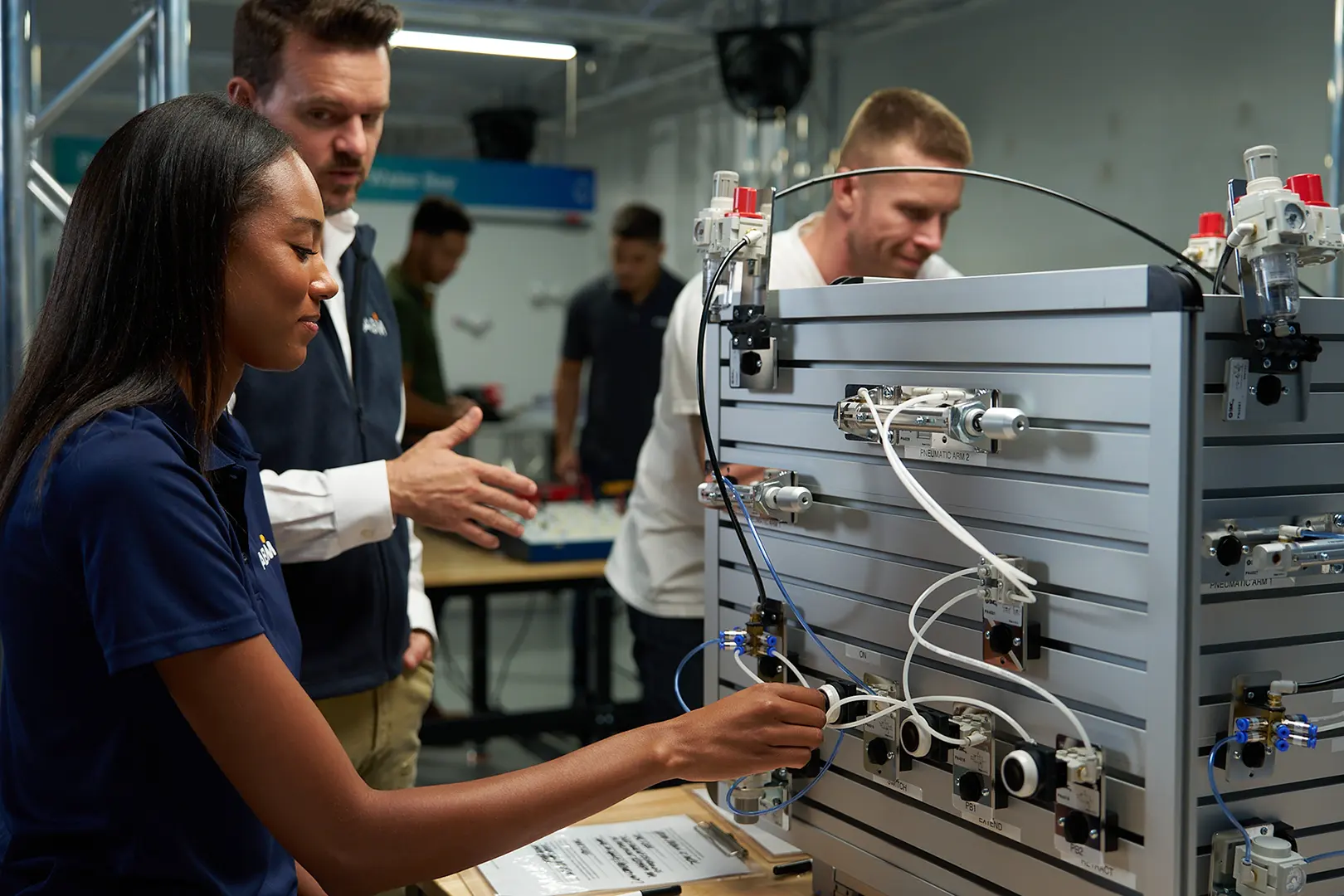
Trained, protocol-fluent technicians are treated as a managed asset. Teams are recruited, trained, credentialed, and site-familiar against fab-specific requirements, rather than a staffing transaction. Mobilization runs as its own project workstream with its own milestones, so day one is not the operations team's first day in the building.
Data as connective tissue
Shared dashboards, CMMS, predictive maintenance, and benchmarking unify best practices across sites and phases, so what is learned ramping one fab improves the next.
The measurable outcomes of an integrated model
The proof shows up in operations. Across semiconductor and other high-stakes environments, the integrated model has delivered:
- 99.9%+ uptime sustained across multi-site programs, including a Silicon Valley manufacturer partnership built around uptime and innovation
- Zero recorded safety incidents on a 6-million-square-foot fab final clean with more than 300 workers
- Year-over-year cost savings, including $3 million in first-year savings from vendor consolidation
- Reducing carbon footprint through waste diversion, drought management, and lighting and energy efficiencies, with an increase in recycling of 12% in just six months
An integrated facility services partner does more than simply check off tasks on a to-do list. It improves safety and efficiency while optimizing facility performance and production uptime. A single, unified partner removes middleman fees from having multiple subcontractors, provides scheduling and production support, and prevents business interruptions. They can reduce impacts to production (ITP) and extend the lifecycle of your buildings, equipment, and assets.
“Having a single party across that handoff means we are helping clients reduce that risk through more internal collaboration and alignment — often before the client even has to think about it,” said Neha Dhingra, Vice President, Commercial and Operations Management - Microelectronics
Conclusion
A semiconductor build-out succeeds when it operates as an integrated ecosystem, not a collection of isolated players. That logic applies inside the fab as much as it does in other critical environments. Facilities, production tools, and the people who run them are one system, and they perform like one when they are managed like one.
The fabs under construction today will underpin tomorrow's technology. Whether that investment pays off will be decided less by what gets built than by how it is run.
In part two of this series, we will outline the pressure points in the transition process from construction to operations. We will demonstrate why working in an integrated facilities model with specialized expertise helps prevent failure at crucial points across the handover. And, we will share some of the key traits to look for in an a partner that treats operational readiness as a deliverable, with a scope, a schedule, and an owner.
Learn more about ABM Connect and how it can help teams coordinate between phases of a semiconductor build.





%20(1).webp)